
Who We Are
-
We believe in keeping things simple, personal and experience driven. Our approach focuses on the connection between the nervous system, emotions, stress and physical pain showing up in headaches and migraines. We believe that ongoing pain is not always caused by structural damage alone, but can also be influenced by nervous system dysregulation, chronic stress patterns, and unresolved emotional responses.
-
outofthepain.com was created through our personal experience with chronic headaches and the emotional impact it has on everyday life and your family and friends.
Seven years ago, after my husband’s brain tumour surgery, he began suffering from chronic tension headaches and ongoing neuropathic pain in his body. Like many people living with chronic symptoms, we spent years searching for answers - trying different medications and treatments, often with difficult side effects and little lasting relief.
There always comes a point, where you would do anything to find relief from pain. It is all consuming, you just want to run away from it all, because you see no other way out. You take medications that reduce the pain symptoms, but yet their side affects have such a high impact on your daily life, you can barely enjoy it. Drowsiness, tiredness, dizzyness and nausea are just a couple to mention. It is like living behind a wall of fog, separated from everything going on around you, while the pain is still partially there.
Watching someone you love live in this hell of everyday pain battle, can feel deeply helpless. It affects your life as much as theirs now, so you go and research beyond the classic western medicine approach. You dive deep into neurological science, new studies and look for information beyond the links of structural damage and pain.
So after seven years of research and our personal trial error process, we couldn’t deny the connection between the nervous system, stress, emotions, and chronic pain and headaches.
It was hard to find somebody who specialises in this connection: Doctors have a tight schedule and usually have to dissociate from issues because the empathy would be too consuming. Therapists were to broad and not specialised enough to understand how the pain shows up, what it means for your everyday life and how to make the connections.
So we combined all the little bits and pieces that worked for pain management and created a new program of possible trauma identification, nervous system relaxation, stress management and the most underrated feeling of being understood and not alone.
All of this combined will be the foundation to support you in managing your chronic pain better and even slowly teach your body to let go and just like my husband reduce medication and feel like you are living an enjoyable life again.
Because as world-renowned neurosurgeon Dr. Sanjay Gupta says “You have to address the baggage as much as you address the pain” in order to treat it.
-
Our work is grounded in both lived experience and evidence-informed mind body approaches designed to support physical and emotional well-being. We combine modern pain science with practical self-awareness tools in our sessions.
We believe healing begins with feeling seen, heard, and understood. We approach every person with empathy, respect, and without judgement.
Healing happens best in an environment of patience and emotional safety. We encourage gradual progress, self-compassion, and listening to the body rather than forcing change.
We value honesty, openness, and real human connection over quick fixes or unrealistic promises.
Your privacy matters. All conversations are handled with care, kept confidential, securely stored, and deleted upon request.
Why Attention-Based Relaxation Exercises Help the Nervous System:
In this programme attention-based relaxation exercises are used to help you reconnect with your body, calm the nervous system, and increase emotional awareness. The main focus is to gently rebuild the connection between body and mind.
Understanding why these types of practices matter, will make it easier for you to stay engaged with the process and experience meaningful results over time.
How it works :
When we go through stress, difficult emotions, or trauma, the body can hold tension and we may lose touch with how we truly feel.
As this disconnection grows, people may experience persistent pain, anxiety, racing thoughts, low energy, or a sense of emotional flatness. Some describe it as living in a “no-man’s-land” between emotions - neither fully connected nor fully aware of what they are feeling.
The body often carries these unresolved stress responses through chronic muscular tension and heightened nervous system activation. As these reactions can become automatic over time, many people are not aware of them. However, the body continues to communicate through symptoms such as tension, physical discomfort, restlessness, exhaustion or emotional overwhelm.
Research in somatic psychology, mindfulness, and trauma informed therapy suggests that emotional regulation improves when people safely reconnect with bodily sensations and allow emotions through the nervous system rather than suppressing or intellectually analyse them.
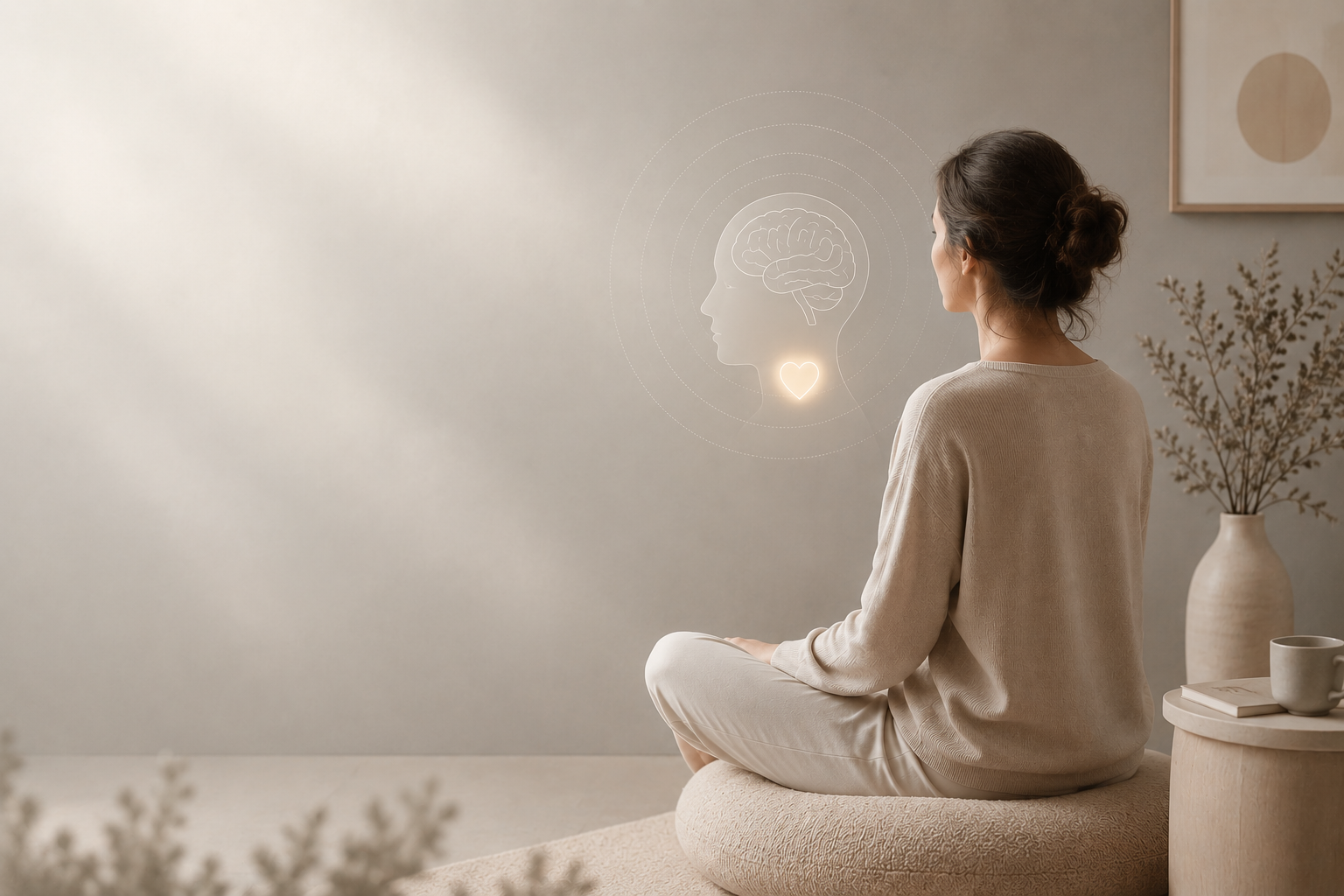
Emotions are essentially physiological energy and information moving through the body. When they are resisted or suppressed, tension can remain trapped in the nervous system. When they are felt safely and allowed complete their natural cycle, many people experience greater calm, which helps reducing pain.
These practices train you to bring attention back into the body. By noticing sensations and allowing emotions to be felt safely, the nervous system can gradually relax and release the stored tension.
In the beginning, it may feel difficult to sense certain parts of the body or remain present with physical sensations. This is completely normal. Like any skill involving attention and nervous system regulation, it develops through consistent practice. For best results practice the exercises regularly, ideally twice daily at first, and continue as long as it remains challenging.
These exercises will be sent to you and practiced with you among many other steps in your program.